Friday, February 1, 2019

A Note to My Former Self Regarding the Elusive Dream Job

I’m back! I haven’t written in this blog for many years. I originally started this as a way to update family and friends about my post-college travels, and then later again about my experiences the year I lived in Guatemala. That was over five years ago now.

After college, people would ask what I wanted to do – what was my dream job? I would say, anything where I can get paid to travel. And for the past five years, I have indeed had such a job. I traveled all over the United States, working with middle and high schools to bring their students on educational programs in Washington, DC. I loved my work, but it was missing one qualifier to my original statement – what I REALLY meant when I said travel was travel internationally. I still felt like I was falling short of the dream.

So this year, things are changing. I am starting a new chapter in my career, with a new company where I will lead high schoolers on educational trips around the world. I get to combine my wanderlust and my passion for working with young people, hopefully sparking in them the same fascination with global issues and cultures that I remember experiencing when I was in my teens. In addition, I am working toward a Master’s Degree in International Education, and in August I am marrying a partner who shares my penchant for travel. All of these elements combined, this year is going to take me (literally and figuratively) to new corners of the world. And since I am notoriously bad at sharing photos and updates with those of you back home, I thought reviving this blog might help me stay connected.

Before I dive into my new adventures, though, I want to start with a recap of the places my work has already taken me in my own country. Some highlights:

1. Massachusetts in the fall. In my previous job, I went to Boston probably six or seven times a year, but no time was better than October. The autumn leaves were spectacular – I’d often catch myself veering off the road as I gaped at them, and in between meetings I would find parks or trails to stop and meander in the rainbow colored woods. The suburban towns of Boston are also quintessential main street USA – every street seems to be lined with white picket fences and American flags straight out of any idealistic patriotic campaign ad, and every little town has a square with a statue honoring some hero of the American Revolution. In addition to “leaf peeping,” some favorite experiences in Mass have been hanging out near Fenway Park on opening day, watching the sunrise over the beach at Plymouth Rock (although the rock itself is completely underwhelming), perusing witchcraft shops in Salem, and exploring the Boston Common and the Back Bay, my top two areas downtown, on both sunny days and snowy ones. 

This puppy and I had the same reaction to Plymouth Rock - "That's it?"

2. Road trips in the Southeast. Unlike Boston where our business was saturated, in the South I worked with just a handful of schools scattered across several states and towns. So I would often fly to one city (Charleston or Charlotte, or Nashville) and drive to the others (Columbia, Savannah, Chattanooga, a few times Huntsville, and others). It was usually a great chance to enjoy warmer weather, extra-friendly people, and different pieces of U.S. history. Some of my favorite memories there were visiting family in South Carolina, country music singalongs in Tennessee, and the Civil Rights Trail in Birmingham’s Kelly Ingram Park.

Live music in Nashville

3. California coast. It goes without saying that Cali is a beautiful and fun place to visit. Through several trips, I trekked around San Francisco and the Bay area, and once down to L.A. I got to watch surfers in the sunset on the beach in Encinitas, walk amongst the redwoods in Muir Woods, and taste tons of LEGIT burritos and tacos up and down the coast. And I saw some buddies and soaked up the sunshine along the way. West coast vibes are always easygoing – my style.


4. Some honorable mentions. These didn’t make my list of peak highlights but they were still memorable destinations: New York, Connecticut, Philadelphia, Chicago, San Antonio, Miami, and Fort Lauderdale. I got to visit old friends in several of these cities, try delicious food, and take in the sites and sounds of notable places like the Alamo and River Walk, the Rocky Steps, Lincoln Park, and the NYC skyline view from Brooklyn. I loved every chance I got to walk around and get a feel for each place. 

I could go on and on about the plethora of cool little nooks and nature-seeking detours I’ve found in my U.S. travels. In the day-to-day grind, I didn't always take note of how lucky I was to get to see so much of this country, but looking back on it, I have been incredibly fortunate. I may not have had THE dream job I envisioned, but I had A dream job that sent me places I might otherwise never see.

Right now I am on my way home from Greece - my first trip with my NEW dream job - and that will be my next story to tell. I am looking forward to another year of expanding my knowledge of the world, from my own backyard to the other side of the globe. Thank you to all who have cheered me on and built me up along the way, and I can’t wait to share more soon.


View of Mount Rainier flying home into Seattle - Life is pretty cool sometimes.

Saturday, December 28, 2013

Floating, Free Falling, and a Beautiful Finish

The clock first started ticking in mid August. The more tourists I talked to, the more I realized that despite spending over half the year in Guatemala, I had barely seen the country. I had visited Lake Atitlan twice, and nowhere else. That would be like... like living in San Francisco and never going to Yosemite, or living in Florida and never visiting Disneyworld, because on weekends you always just go to the same beach. I was having a wonderful time in Antigua and Guate City, but I wasn't seeing new places. And my time was beginning to run out.


I immediately grabbed a co-worker and made plans to see the beach that weekend. The closest and most popular beach to Antigua is Monterrico, a 2.5-hour drive away on the Pacific Coast. It's known for its black volcanic sands and unruly undertow in the surf (you can't really swim there, you'll get pulled under before you can blink). We booked a shuttle to go just for an afternoon. On the way, our driver pointed out signature sights of the coastal lifestyle: farms growing loofah and papaya, others culturing shrimp, and my favorite of all, the home of a family who raised crocodiles in their backyard. Oh, what a business to be in.


The rest of our beach day was spent strolling the hot, grey-black beach, and taking a tour of the mangrove swamp nearby. It was a quiet day outside peak season, so my friend and I were the only ones on the tour. Our original tour guide decided at the very last minute to have lunch at our scheduled time, so he sent his 13-year-old son, Carlos, to guide us instead. We walked behind the family home where they kept their "lanchas" (little dugout canoes), and Carlos led us into the swamp, piloting the boat with a long stick. He showed us through the tunnels formed by the mangrove trees' tangled roots, pointed out birds' nests, lizards, different types of cranes, and flying fish, all the while navigating through a sort of magical network of sunny waters and lily pad fields. It had such a peaceful effect; we were happy to feel lost there, but very glad that Carlos knew the way. It was his backyard, after all.


Where the year went after that, I have yet to comprehend. Suddenly, it was December 6th, and Safe Passage had closed its doors for the year. I didn't want to let them go, but the silver lining in saying good-bye to so many special people was the whirlwind end-of-year tour that began the very next day. With a group of ten colleagues, I boarded a bus to Rio Dulce. Then from bus, we hopped to boat and stayed one beautiful, warm sunset and one cloudy sunrise at a resort on Lake Izabal. Next, another boat down the river to Livingston, where we emerged from towering, tropical green cliffs on either side of the waterway into the open blue Caribbean waters beyond. The same route had once been taken by (real live!) pirates in the 16th century, a fact contributing to many an entertaining daydream during our little cruise. We stayed two nights in Livingston, long enough for me and a few friends to explore Siete Altares (a series of rounded-edged waterfalls attached to the Rio) and spend an afternoon beach bumming and sipping Coco Locos (a coconut sliced open, plus rum) on Playa Blanca. It was the quintessential paradise we had all dreamed of on so many dreary, rainy work days. We saw the sunrise every morning, and we ended the nights with seafood feasts and hammock pow wows.

With my time limited and my bucket list still beckoning, I and a couple friends broke off from the group early to see one more "must." We shuttled our way inland to Semuc Champey, a national park and yet another land of enchanted wonders. We stayed at an eco-lodge that overlooked the park's main attraction: a series of naturally turquoise spring-fed waterfalls and pools, wedged in a thickly forested valley of vines and trees older than history. It was gorgeous. Despite clouds and rain, we went on the full tour of the park, which began with a hike up the cliffs overlooking the pools for a stunning first view. Then, our guide, Toto, took us down to the water, where we followed him (with a great deal of blind trust) on series of short cliff jumps and natural rock slides in and out of the falls and pools themselves. At one point, Toto dove into the water, under a rock ledge, and disappeared, until he emerged a minute later from the other end of the same cliff some twenty feet away. Then, he instructed me to do the same: "Your nose, up! For the air. You go only one second under water." I followed him into the depths and out of sight, under the rock where he revealed a small inner crevice that allowed us to breathe just above the surface. We were walking along the underbelly of the cliff that, from the outside, had appeared completely submerged. That was the first moment in which I thought I was doing the craziest thing I would do all day. But the tour carried on to even more insanity after lunch.


Crossing the iron bridge that hung some 30-40 feet over the river at the foot of the falls, we next entered a cave. Toto turned us over to a cave guide, who handed us each a tall white candle and led us into the darkness. With the candles as our only light, we slowly navigated the freezing underground waters, wading and even swimming when necessary, stopping here and there to take in the dim sight of the beautiful rock formations and massive inner caverns. Then, we stopped. The guide told us to stay put and wait for him to light the way. He scampered ahead, extra candles in hand, into the darkness. You could tell by the way he moved that he was so familiar with every inch of that cave, he probably didn't even need the light. When he finally came back to lead us on, we could see why it took such time. The tunnel ahead rose abruptly, and in order to keep going, we would have to climb, one by one, straight up the middle of a roaring, gushing white waterfall. When my turn came, caveman handed me the rope that was attached somewhere invisibly above, counted to three, and thrust me into the pounding rapids that immediately engulfed me at the base of the fall. Talk about blind trust - all I had was the rope in front of me, and this guy's word that I would make it to the top before I drowned in the rush. Well, okay. Finding my footing and following the rope's trajectory, I climbed into the cascade, and in four careful hoists, miraculously made my way over the top of the waterfall. My friend who had gone ahead of me laughed. "So crazy, right?!" Not much farther along after that, one more pool and one more cliff jump awaited, this one about a 15-foot drop. After the waterfall, that seemed easy. "Jump right in the middle," the guide says. "Otherwise, you hit rocks." Splash, we survived.


After the cave tour, Toto took over again, bought us beer, and handed us inner tubes for a quick but relaxing float down the river. Our adrenaline settled. We thought the tour was over. But after coming ashore, as we walked back up toward the lodge, we crossed the big bridge again. Three quarters of the way across, Toto came to a halt and began collecting our tubes. He pointed to a spot in the murky river waaaaaaaay down below: "You can jump here." As if it were obvious. My eyes widened as I leaned over to look. There? No. No f***ing way, Toto. This time, he had to be joking. This was no baby cliff jump, this was a method of suicide. I waited for a smile and a "just kidding!" but as I waited, two guys from our tour group hoisted themselves up and over the iron rails and off the edge, just like that. Falling, falling, falling, splash....... and they surfaced. Well, I couldn't let them be the only ones. If your friend jumped off a bridge, would you jump, too? Yes, apparently I would. THAT was the craziest thing I did that day.


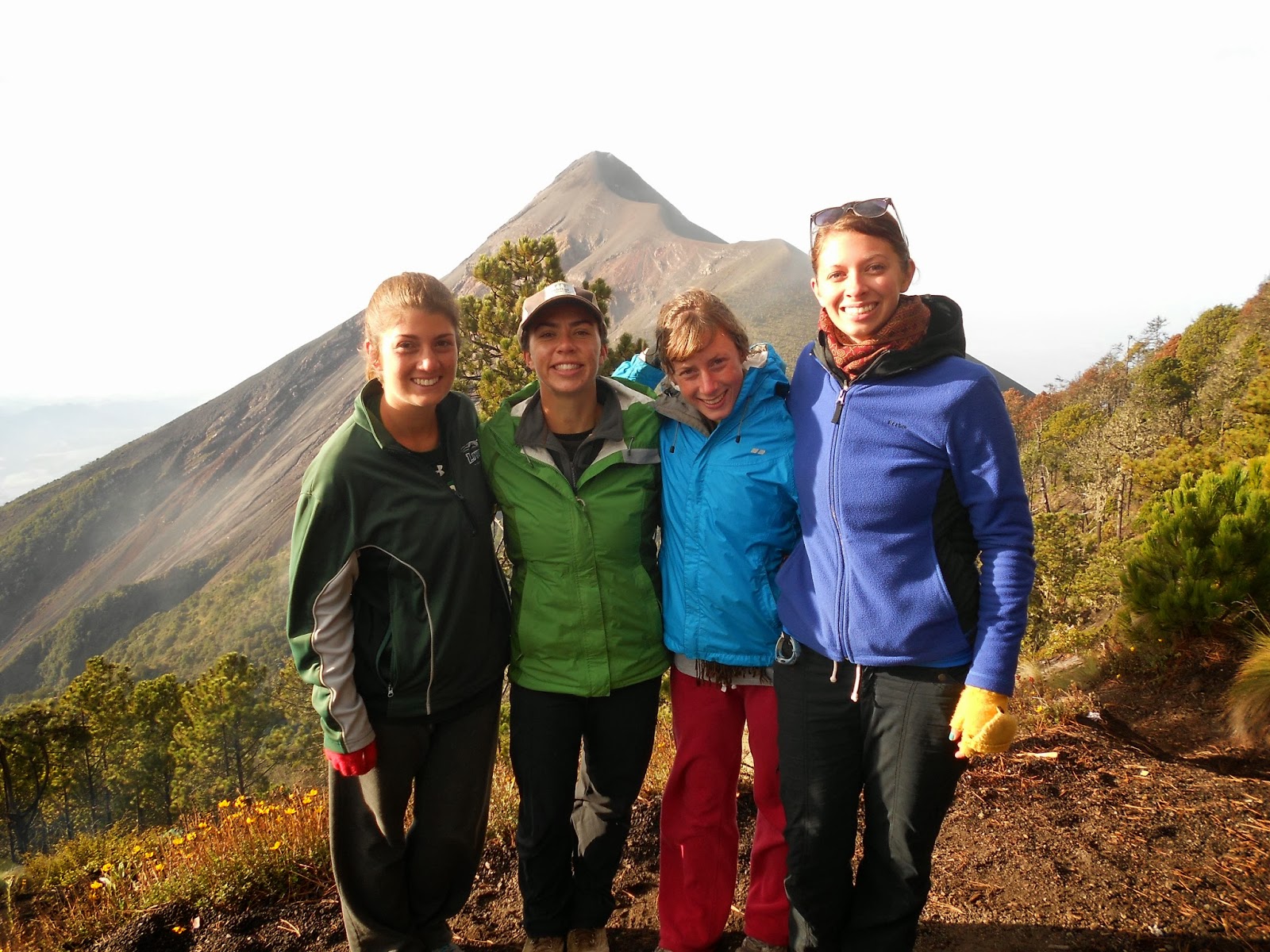
I returned home from Semuc the next day with four days left in Guatemala and one more bucket list feat to accomplish: hiking to the peak of Acatenango, the volcano that dominates Antigua's western skyline. And it was to be an unforgettable finale. With a group of eleven friends, I climbed through steep farmland and forest trails, past the treeline and above the clouds, five and a half strenuous hours to our campsite just 200 meters below the summit. From the site, we could see two active volcanoes (Fuego and Pacaya) erupting in the night, the silhouettes of countless distant mountains, the bright lights of the capital, the faint Pacific coastline, and the streaks of shooting stars above. It was the most indescribably beautiful sight I have ever seen. No one wanted to sleep, no matter our fatigue. We sat around the campfire for hours, sharing jokes and favorite memories, and quietly absorbing the dreamlike scene around us. We were awestruck, weary, happy, filthy and exhausted, and on top of the world. I could not have asked for a more perfect ending to the year.


That night, as I looked out over the country, I could see the places I had explored. I thought of the people I had grown to understand, and this little world I had become part of. Or rather, the places and people that had become my world. I felt overwhelmingly grateful for it all. Grateful, and unsure of how it would feel to leave that world behind. But I've come and gone enough times to know that you never fully leave a place once you are part of it. You keep pieces - images, feelings, lessons learned and relationships forged - with you forever. That's how our little worlds evolve, and in turn, how we do. So I head now for the next adventure, knowing Guatemala will be with me for a long time to come.


Sunday, December 1, 2013

This year, when I give thanks...


My volunteers often comment that their experience with our communities helps them remember to be grateful for what they have. They talk about what they have learned about our students: the rough conditions in which they live, their varying and often volatile family dynamics, the disheartening odds they face, and their resilient spirits. In reflecting on these realities, the volunteers make comparisons to their own background. Many times they realize aspects of their lives that mark them as privileged, advantages they never knew they had in life.

I have experienced many moments here that evoke similar reflections, the most resonating of which usually result from interactions with the mothers we work with. A few weeks ago, for example, we hosted a "Family Day" at Safe Passage, where we invited the students and their parents to come in for a day of games, prizes, fun, and food. One main event was a raffle where parents who had won tickets over the course of the day could win small prizes. As they were getting ready to call ticket numbers, one of the moms, Juana, turned to me and said, "Could you help my mother?" (She gestured toward the grandmother next to her.) "She can't read." I looked at the tickets. Each had a 3- or 4-digit number printed on it, in numerals. I looked at the older woman. From my experience with our families, I could guess that she had never been to school. As they called numbers and I scanned through her tickets looking for winners, I thought about what her life could have been like. I cannot fathom growing up and raising a family without this skill that I have always considered so basic. I cannot imagine looking at a printed "203" and viewing it only as figures on a paper, with no decipherable meaning. Her grandson is in our preschool program. He is three years old and probably not far from surpassing her in what we consider education and academic skill. But the knowledge she must possess that has no relation to academics... I can't imagine that either.


That woman's daughter, our Safe Passage mom Juana, graduated this past weekend. She officially passed the equivalent of sixth grade in our adult literacy program, meaning that she has completed elementary school for the first time in her life. I don't know how old Juana is, but I would guess she is not all that much older than I am. I know she has at least three children. Before this weekend, she had never had a graduation before. She had never felt the support of family and friends gathering to celebrate this kind of personal achievement. She beamed. And she was not the only one. Five mothers passed the grade alongside her, and another eight parents graduated the same day from the middle school level. Their parents, including the woman from the raffle, watched them with what I saw as a calm, content form of joy. Maybe the same joy my Grandpa once expressed when he looked around at our Thanksgiving celebration and saw his great-grandchildren running around so happily. Feeling the assurance that you have left a mark on the world, and that your mark is beautiful and ever-growing. That your children will have better opportunities than you did.

I have always known that I was lucky and privileged, relative to most people in the world. And I have always understood that my wealth extends beyond the material (we give thanks for good health, for loving relationships, for simple happiness). But this year, I am thankful more than anything for the opportunities I have had in my life to learn. I have learned from my parents, my teachers, and now, from the families I have worked with. And by all of their lessons, I am better able to work on my own beautiful mark on the world.

Sunday, November 3, 2013

On the Day of the Dead, the blog is alive!

Iiiiiiiiiit's back! Despite my best intentions, I've been pretty MIA on the blog these past few months. Mea culpa. Guatemala has definitely not been void of stories to share, and I will do my best to catch up here, starting with this weekend.


Halloween kicked it off. With Day of the Dead on Friday, everyone had the day off, so Thursday night's party went all night. Antigua's streets were predictably packed, and music blasted on every block. I dressed as my favorite ball player (Yadi!), showing pride despite the bummer World Series finish the night before (more on that in future posts). Friends got together, creative disguises and hilarity ensued. A classic Halloween success.


The real highlight of the weekend for me, however, came the next day, Day of the Dead. Latin American tradition devotes this day to the remembrance of loved ones who have passed. Typically, families spend the day at the cemetery praying and "sharing meals" with their ancestors. When I learned about this in school, I thought it was a little creepy and... silly. But after seeing it in practice, I can't believe the beauty of the experience. Families dressed in their finest, most colorful attire, graves re-painted brightly and covered in blankets of flowers, sun shining, children scampering around, old men chatting and ladies relaxing under trees, and the occasional apparent moment of silence and reflection from group to group... the whole scene was a celebration. Not dwelling on loss or hoping fruitlessly for a sign from beyond, as I had imagined, but a beautiful display of love and togetherness.


That scene took place at the cemetery in Sumpango, a town about 20 minutes down the highway from Antigua. We went there because, in addition to the cemetery gathering, Sumpango hosts a unique Day of the Dead tradition - kite flying. The kites represent an opportunity to communicate with the dead, and a warding off of bad spirits. Many are a typical size, but the ones that upgrade the event from local tradition to full-blown festival are the massive, multiple-stories-high works of brilliant tissue-paper art that represent months of preparation and meticulous care. The big kites display gorgeously intricate artwork, and messages in appreciation of nature, life, and the people's Mayan heritage. Visible over the hill from the cemetery, and in the skies above, the kites added yet another impressively beautiful feature to the Day of the Dead celebration. I could not imagine a more peaceful image.

For the first time in a long time, this weekend I was able to stop thinking about work and take time to reflect on my (ever-shrinking) time in Guatemala. I am so grateful for the beauty I have witnessed here, in unsolicited kindnesses, in personal growth, in nature, in art. In something as simple as a kite in the wind. I never thought I would find this kind of joy on the Day of the Dead.


Tuesday, July 23, 2013

Highlights and New Heights

I saw the wave coming at the end of May. Five teams in four weeks, and my family on their way to Guatemala – I knew June would be a rush. It’s been awhile, but here are some highlights:

I finally got to join the Safe Passage mothers for their Saturday morning running club. The day I went, it was five moms with about four kids in tow each; the youngest was 2. The mom in charge of bringing snack that day ran the whole 30 minutes in her traditional traje (woven ankle-length skirt) and flats. Snack was refried bean sandwiches.


On a similar note, playing ultimate frisbee on Sundays has gotten epic with the rainy season. Playing sports in the rain always has been and always will be twice the fun.

Work got wild. I led all those teams, in a row. They were almost all high schoolers. In many ways different and in many ways the same week to week. One team came from a Jesuit school that had me flashing back to my high school experience a lot more than average. Another team engaged me a in a plot to solicit a serenade for their student leader by a dark and handsome Guatemalan guitarist. Multiple teams had dance parties with the Safe Passage students. Nothing breaks down cultural barriers like a spontaneous teenage dance party.


I moved, again. Third move, fourth living situation, and this time, really, it will be the last. I now share a house with two friends, Amanda (the same roommate from the last house) and Melissa. It’s a one story little casita that costs less and is much closer to the center of town than we used to be. We call it Los Tulipanes (The Tulips) for a sign conveniently posted outside our door with that title. To save money even further, I opted to take the smallest room, which was built originally as the maid’s quarters. On our first night, we discovered that Amanda’s room, the master, has a wall switch that rings a bell in mine, should she need to call me to bring her hot beverages, etc. Like that scene in Cinderella, haha. Anyway the place also has a baby little courtyard and a comfy family room with fireplace. We have instituted periodic family dinners. I know I said I planned on making the last place my home, but this place already feels like home without my trying.


And finally, the highlight of highlights, just a day after we took over the new home, my own family came to Guatemala! Lisa (my sister) and my dad arrived just in time to meet my Jesuit team (an easy group for my family to mingle with, for sure). They shadowed me on the job for a few days, getting the official Safe Passage tour and a few project sessions in with some students. Lisa made instant friends with my team members, and with the kids in their classes. Dad was a beast at groundskeeping in the preschool, hacking up weeds so fast he broke one of the shovels. They were a mighty force.


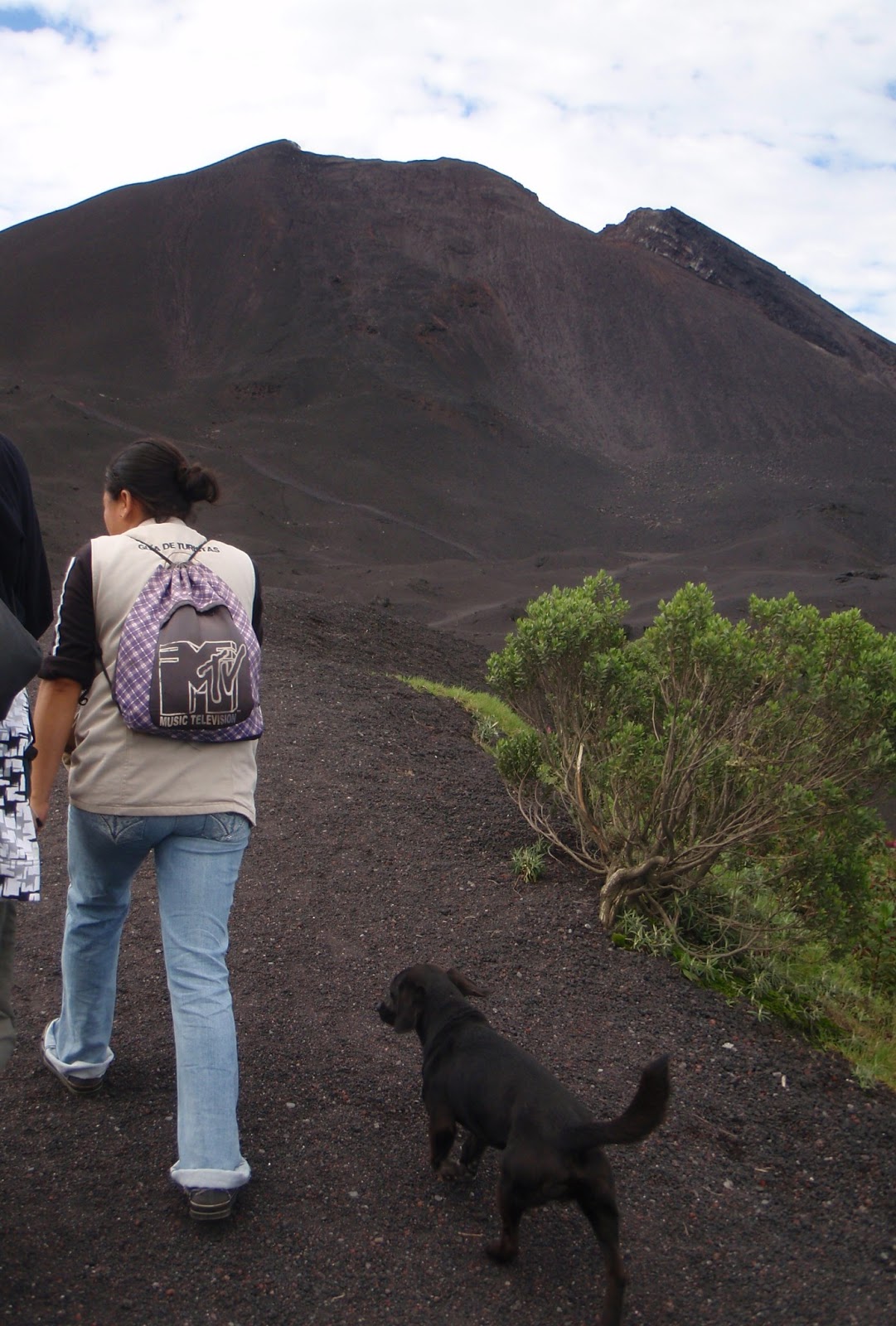
On the days I was able to take off work, we went exploring together, discovering new wonders and basking in Guatemala’s natural beauty. We took a gorgeous hike at Earthlodge one day, catching the view above the clouds. Another day, we hiked Volcan Pacaya. We took a completely different route than the previous time I’d gone, complete with lush forest and picturesque views of a crater like called Amatitlan. When we got to the top, we roasted marshmallows on open vents emitting volcanic steam. The top of the volcano, as before, was windy and barren - a rough, out-of-this world landscape. But our tour guide’s tag-along puppy kept us company the whole time, reminding us that soft comforts were still not far away.


Near the end of the visit, we took the family tour on the road and headed out to San Marcos, one of the towns along the Lake Atitlan shore that I had yet to spend enough time in. True to the reputation I knew of it, it was full of hippies. Lisa and I got massages from a woman named Beatriz and sipped “raw” almond-banana smoothies under the fan-like leaves of ceiba trees. The three of us stayed in a hotel that the tour sites describe as “Alice in Wonderland for adults” where each room had a theme; ours was recycled art, and it was possibly the coolest (indoor) place I’ve ever slept. Everything was constructed with colorful old glass, the walls sported mini murals of indigenous stories, and every nook and cranny was creatively utilized. And it was up high. Dad kept saying how it felt like a treehouse.


Our last adventure together in San Marcos was a visit to a park along the town’s western shore. We rented kayaks, hiked a small hill to a Mayan “ruin” (circle of stones?), and took a swim off the rocks. I was easily persuaded to jump off the 25-foot-high platform set up over the water. The second time, I even managed to do it without screaming. It was a beautiful day.


I am hoping that more days like that one are on the horizon. Having now passed the sixth month mark in Guatemala, I am officially in the second half of my year here. I’ve lived here longer than I’ve ever lived anywhere outside the U.S., and I feel like I still hardly know this country. There are still cities to get lost in, peaks to ascend to, views to wonder at. It’s time to make a bucket list – everything I want to be sure I do before my time here is over. The way things have been going, I know time's not about to slow down and wait for me.

Friday, May 31, 2013

Where to throw the toilet paper and other (reverse) culture shock experiences


I took a trip home this month. Back to my beloved STL, my family and friends, my baseball and my beer. After a whirlwind visit, I flew out to the only other place I’ve ever considered home – DC. I didn’t get enough time in either place, but the time I did spend was wonderful. A few things, however, struck me quite differently than they used to.

One, the simplest of all, and yet the most difficult to adjust to, was the toilet paper. For four months now, I’ve been throwing used toilet paper in the trash can. At first, I think most people from the State find this kind of gross. We aren’t comfortable with letting the stuff sit there in a trash can; we want it gone. But I had a very hard time kicking the habit and going back to my former, immediately-flush-it habits. And what’s more, I didn’t like it. Flushing toilet paper instead of canning it no longer makes sense to me. It’s paper, it goes in the trash. Whose idea was it to flush it? How did we all end up doing it that way? I don’t get it. But don’t worry. While I was home, I managed to remember that in the States, it goes in the toilet. Most of the time.


Two, things that work. Wifi. Water pressure and showerheads. Buses that run on schedule. None of these are reliable in Guate. I’m pretty sure I did a little victory dance taking my first U.S. shower. But then, I also had some trouble understanding the urgency of getting to the bus stop by exactly 6:04.

Three, the buildings. And the city landscapes in general. I had forgotten how large and how shiny we like to build things back home. Not that Guatemala doesn’t have its fair share of modern architectural ventures; it does. But something about walking around DC made me sort of… simultaneously marvel at and question the design of everything around me. It seemed that every building was intended to compete with those around it. Who could construct the shiniest, sleekest, most polished stone-glass monolith to make their suit-donning minions feel important? But at the same time, wasn’t it nice? It did make me feel good, to be in a place that seemed taken care of. And the rowhouses lining the streets of Shaw-Howard, with their colored bricks and miniature front porches, how are those any less charming than Antigua’s rainbow of colonial walls? They aren’t. Both are beautiful.


Four, grocery shopping. Specifically, the produce section. Whoa. That was a lot of food, all in one place. And so spread out, and so organized, and so clean. In Antigua, I have two options for produce, and neither looks like that. I usually go to the market, which is open air, and the food is freshly plucked from wherever it came from. Still sporting the dirt from the farm, the stems, the leaves, everything that has been shed and rinsed for our glistening produce displays in U.S. stores. I buy my Guate fruits and veggies from dozens of individual vendors who sell their wares in small quantities. So, okay, it’s a farmers’ market. A crowded, inexpensive farmers’ market serving as the vendors’ main source of income. Their biggest competition is Antigua’s grocery store, the Bodegona. But the produce there doesn’t look a whole lot different from that in the market. And the produce section as a whole spans a space that I’d compare to say, the size of my living room. The space occupied by one produce section in the States, meanwhile, could probably form the foundation of an entire house. Everything with its neat little section. And so. Much. Food. I might have gotten lost.


Five, food trucks. Food trucks get their own category because they represent a lot more than just selling food out of trucks. Which, I should first explain, works a lot differently in Guatemala than in the States. A Guatemalan food truck is a guy with a pickup parked on the side of the road selling ceviche out of the truck bed. The food truck trend in the States used to excite me. Now I can’t believe the fact that it’s even considered a “trend” and not just… something someone does to make a buck. And in Guate, it’s with so little regulation or backlash. I remember reading news in the States about standing businesses requesting limitations on food trucks – where they could park and sell food, at what times, on what days. Because God forbid someone with a less costly business concept is actually able to stay afloat in a sea of Starbucks’ and Cosi’s. Small businesses in Guatemala – and I mean really small businesses – don’t face nearly the same level of challenges. If I want to start a business selling pancakes out of my living room, I can. If I want to get a motorcycle and ride around town selling ice cream out of a cooler, I can. It’s a lemonade stand-style economy in Antigua. But it’s not about teaching sweet childhood lessons in basic math and customer service. It’s about putting food on people’s tables. And for me, they’re adding to the character of the town, the simplicity that I so enjoy about living here. On wheels or within walls, no U.S. dining experience can compare to eating burritos at El Farol. While the cook grills my veggies, his daughter does her homework in the back room, and his son learns to walk in between the tables. Because the restaurant, to them, is just one room in their house. That’s the kind of small business I wish we had more of back home.


I was surprised by the things that struck me so oddly during my visit. But I was happy to see them in a new way. New perspectives add value to experiences, and no experience will ever be as valuable as going home. 

Wednesday, April 17, 2013

My Dry Hot Guatemalan Summer

It’s nearing the end of “summer” in Guatemala – the hottest time of the year, as well as Lent/Holy Week season. This is appropriate, as my job has grown to feel ever more like a return to my days as a summer camp counselor. I wake up with the sun, spend every meal with my team, answer the same questions and lead them through the same schedule of activities as the last week's team, and the one before that. When plans go awry at the last second, I come up with a new plan on the spot. I make sure every little need is met at every turn, then go to bed exhausted knowing it won’t be enough sleep before the alarm rings again. But, I love it. Just as I experienced at camp, the day-to-day wear and tear is a worthwhile trade for the growth and discovery I see people experience. I get to know people in weak moments and in shining ones. I witness my team members fighting discomfort and fear in favor of trying something new and challenging. I watch them form bonds with our students that transcend language barriers, cultural differences, age, and socioeconomic status. I see smiles and laughter and spirit. And frustration. And new understanding. And I am privileged enough to play some role in it all. Just like at summer camp, I get to be part of small but significant change.


As this “summer” rolled along, the Lenten season in Antigua incited a barrage of purple banners, street vendors, and heavier-than-usual traffic. Swarms of people from the City and surrounding towns flocked in to view the town’s famous Lenten processions. In the words of my roommate’s brother, Bertram, the processions are, “like a bad school play.” Small crowds of men wearing long purple robes march slowly through the streets, a few in gladiator costumes to represent the Romans, with women in white dresses and veils. A select number (maybe 20 at once) carry a long, heavy platform supporting statues of the day's designated depictions of Christ. Amid dense clouds of incense, they file along to the sound of the band that brings up the rear. The songs are… theatrical. Think, a 25-member out-of-key brass band, accented by a few drums and cymbals. At an overdramatic, low-budget school play, performed in your high school's parking lot. But at such a profound level of public reverence. When a procession passed the only Irish bar in Antigua on St. Patrick's Day, for example, the bar stopped the music out of respect. Despite the outsider's impulse to critique, these traditions are part of Antigua's history, its identity. And that we can appreciate.


So, during Lent, the processions wind through Antigua on a maze-like path, most beginning at 1 in the afternoon and ending around 10 or 11 at night. The route is a mystery, but you will know a procession is heading your way when you see people preparing “alfombras” - carpets. This is the coolest part, much cooler than the processions themselves. People create this artwork in the middle of the street using colored sawdust and a variety of other materials (grass, wheat, flour, glitter, seashells, flower petals), laid out in the design of a bright, beautiful, religiously-themed carpet. When then processions pass, they walk over them, and then what remains of the carpet is gathered into a bin and burned. It’s like an offering, but the practice also has ties to indigenous traditions and the theme of impermanence. Where the processions are, for me, underwhelming, the carpets that precede them display wonderful expressions of personality and community.


Lent culminates in Holy Week, which in Central America equals vacation. Schools and businesses shut their doors, and everyone takes to the beach. Other than a couple previous half-day trips (I visited a macadamianut farm and a homemade chocolate operation), Holy Week was my first opportunity to experience Guatemala as a tourist. My boyfriend, Jon, flew in for the adventure. First stop: Guatemala City. After a lively, mildly crowded chicken bus ride, we successfully rendezvous’d with Jon’s friend, Delia, who had generously volunteered to “kidnap” us. She took us to the National Museum of Archeology and Ethnology for a glimpse of indigenous art and history. Then, we hit a delicious pizza restaurant, and the city’s central plaza. Our plaza visit fell on the occasion of an annual demonstration, in which students from the University of San Carlos put on a march in mockery of all things authority-related: The University President, the government, and the Church. They wore hooded robes in the university colors and carried statues modeled after the Lenten processional statues, except with figures portraying, for example, a skeleton carrying a cross. Very interesting. We followed a few students to the bars to wrap up the day.


Next, in an attempt to escape the Holy Week mayhem, Jon and I shuttled out to Lake Atitlán, in the western Guatemalan highlands. We stayed in Panajachel (or simply “Pana”), the second-biggest lakeside town. Pana’s docks offer picture-perfect views of the two volcanoes just across the water, and at night, small clusters of light reveal the other towns at their base. By day, we explored these towns: Santiago, the largest but ugliest, home of “Mayan God” turned tourist trap, Machimon. San Pedro/San Juan, where we had a pleasant lunch of artisan cheese and sangria. San Marcos, the scenic hippie haven. Pana itself, most notably its nature reserve with rope bridges, waterfall, and spider monkey playtime. And San Antonio Palopó, most traditional of the towns we saw, where everyone speaks Kaqchiquel (the native language), and all the women wear indigo blue “trajes” (woven blouses and skirts).


To get to most of the lakeside towns, it’s most common to take a public “lancha” – small ferry boat. But between Pana and San Antonio, the preferred method is to jump in the back of a pick-up truck with the women in trajes and hold on tight. In either case, the postcard-worthy scenery and fresh wind in my hair made these rides almost a destination in themselves.


After the Lake, we returned to a people-saturated Antigua for the final three days of Lent and the biggest, longest processions of the season. On Good Friday morning, the processions begin at 4 a.m. and go all day and night. We witnessed the crack-of-dawn carpet artists preparing the streets for these processions at 5:30 a.m., on our way to catch the shuttle to VolcánPacaya. We climbed the volcano, an easy hike by anyone’s standards, in a tour group comprised of ourselves, a Spanish couple, and 7 or 8 teenage Israeli girls who I can only describe as princess types. They all rented horses to ride up instead of walking. While we made the ascent huffing and puffing, they were saddled in, smoking cigarettes and taking selfies on their iPhones. Lookin’ cozy. Anyway, in less than two hours, we reached the farthest point our guide would allow us to go, where the weeds and dirt under our feet were abruptly replaced by rough, dark volcanic rock. It looked like the surface of the asteroid in Armageddon. Towering above us, the mouth of the volcano steadily emitted giant wisps of white smoke that conjured up images of an enormous cauldron cooking some mysterious potion. It was like nothing I’d ever seen. On the way back down, we could also see two other volcanoes in the distance – Agua and Fuego, and Fuego was smoking chimney-style the whole way. It was a fascinating little adventure.


Good Friday (Volcano day) was the height of summer’s action. After that weekend, things have really quieted down. I find myself wondering what happened to all the people. Like me, they’ve all returned to their homes and their routines. My team’s driver, Jorge, tells me it’s about time for the heat to go away, too. “And then it will be winter, when the rain comes,” he says. Without getting into the semantics of what classifies different seasons, I nod in anticipation. Let’s just see what the next season brings.